January Is the Real Reset
January Is the Real Reset: Why Mid-Year Is the Moment for Cognitive Skill Building
By Lauren Bochicchio Beaver and Dr. Maya Rose
January often arrives with a sense of urgency in schools. The new calendar year doesn’t just bring resolutions—it brings data. Mid-year benchmarks are in, instructional gaps are clearer, and educators are making decisions about what students need now, not next fall.
For districts, this moment presents a powerful opportunity: to move beyond remediation alone and invest in the underlying cognitive skills that drive learning across academic subjects.
The Mid-Year Reality in Classrooms
By January, patterns have emerged. Some students are keeping pace, others are beginning to disengage, and many are working hard but still struggling to apply what they know. Teachers can often identify what students are struggling with—but not always why.
Research consistently shows that domain-general cognitive skills—such as attention and executive functions—play a foundational role in learning. When these skills are underdeveloped, instruction and domain-specific interventions can fall flat.
Mid-year is when these challenges become most visible.
Why Cognitive Skills Matter Across MTSS Tiers
Cognitive skills training isn't a replacement for instruction or intervention—it’s a multiplier. In fact, the research shows that literacy or math interventions can be more effective if a student first completes a cognitive skills training curriculum.
- Tier 1: Strengthening attention, inhibition, and cognitive flexibility supports classroom engagement and learning for all students.
- Tier 2: Targeted cognitive training can help students to benefit more from small-group instruction and interventions.
- Tier 3: For students receiving intensive services, building foundational cognitive skills can remove barriers that traditional remediation alone may not address.
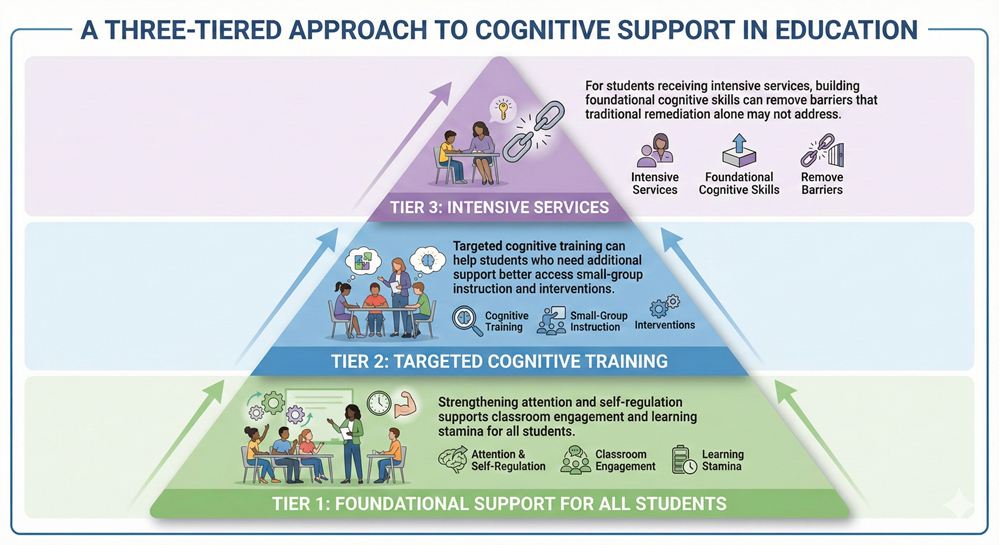
Rather than waiting for end-of-year outcomes, districts can act now—supporting students with tools that adapt to individual needs and provide measurable progress.
January Is About Momentum, Not Catch-Up
The narrative of “catching up” can be discouraging for both students and educators. A cognitive-first approach reframes the work as building capacity—helping students strengthen the skills that allow learning to stick.
When students experience success in focus, self-monitoring, and persistence, that confidence often carries into academics. Teachers notice improved engagement. Administrators see clearer data. And students feel more in control of their learning.
What to Look for in a Mid-Year Cognitive Solution
As districts evaluate tools to deploy mid-year, a few principles matter:
- Ease of implementation: January is busy. Solutions should integrate smoothly into existing schedules.
- Student engagement: Especially mid-year, tools must meet students where they are.
- Actionable data: Educators need insights they can use—not just reports.
- Research alignment: Cognitive skill development should be grounded in learning science, not trends.
Turning Insight Into Action
January doesn’t need to be a pause—it can be a pivot. By focusing on the cognitive skills that support learning across content areas, districts can create meaningful progress in the months that matter most.
At Thynk, we believe that when students learn how to focus and persist everything else becomes more possible.