
To Parents
Navigating the journey of raising children with attention challenges can be quite a feat, and we get it. That’s why we proudly present THYNK – a game-changing solution rooted in real-time biofeedback. Backed by clinical evidence, THYNK is designed to elevate focus and attention in an engaging gaming experience.


Every day, thousands of parents are given the diagnosis that their child suffers with ADHD. It comes as no surprise, however, as the symptoms are typically obvious.
Daily, these parents find themselves:
Struggling to get their children to pay attention and focus
Parents often struggle with their child’s difficulty in maintaining focus and attention, both at school and at home. This can lead to academic challenges and frustration for both the child and the parent.
Overcoming her child’s academic struggles
Many parents witness their child falling behind in school due to challenges in organizing tasks, completing assignments, and managing time effectively. This can be a source of stress and concern for parents.
Disciplining various behavior challenges
ADHD can manifest in impulsive behavior, hyperactivity, and difficulty in self-control. Parents may find it challenging to manage these behaviors and may worry about how it affects their child’s social interactions.
Dealing with frustration from traditional learning approaches
Parents often seek alternative educational solutions as traditional methods may not effectively cater to their child’s unique learning style. They may be frustrated with a lack of resources that specifically address ADHD-related challenges.
Coping with emotional rollercoasters
Witnessing their child struggle can take an emotional toll on parents. They may feel a mix of worry, guilt, and frustration, wanting the best for their child but unsure of how to navigate the challenges associated with ADHD.
Searching for support networks
Parents may yearn for a supportive community and resources that understand the intricacies of parenting a child with ADHD. Connecting with others who share similar experiences can be immensely valuable.
Wishing for positive learning experiences
Parents want their children to enjoy the learning process. They seek solutions that not only address academic challenges but also make the learning journey enjoyable for their child.
We Knew There Had to Be a Better Way
At THYNK, we are dedicated to improving mental focus and cognitive skills through innovative technology and engaging video game-based training. Our mission is to empower individuals, particularly children, with the tools they need to enhance their attention, impulse control, and self-regulation.
The THYNK EEG Headset
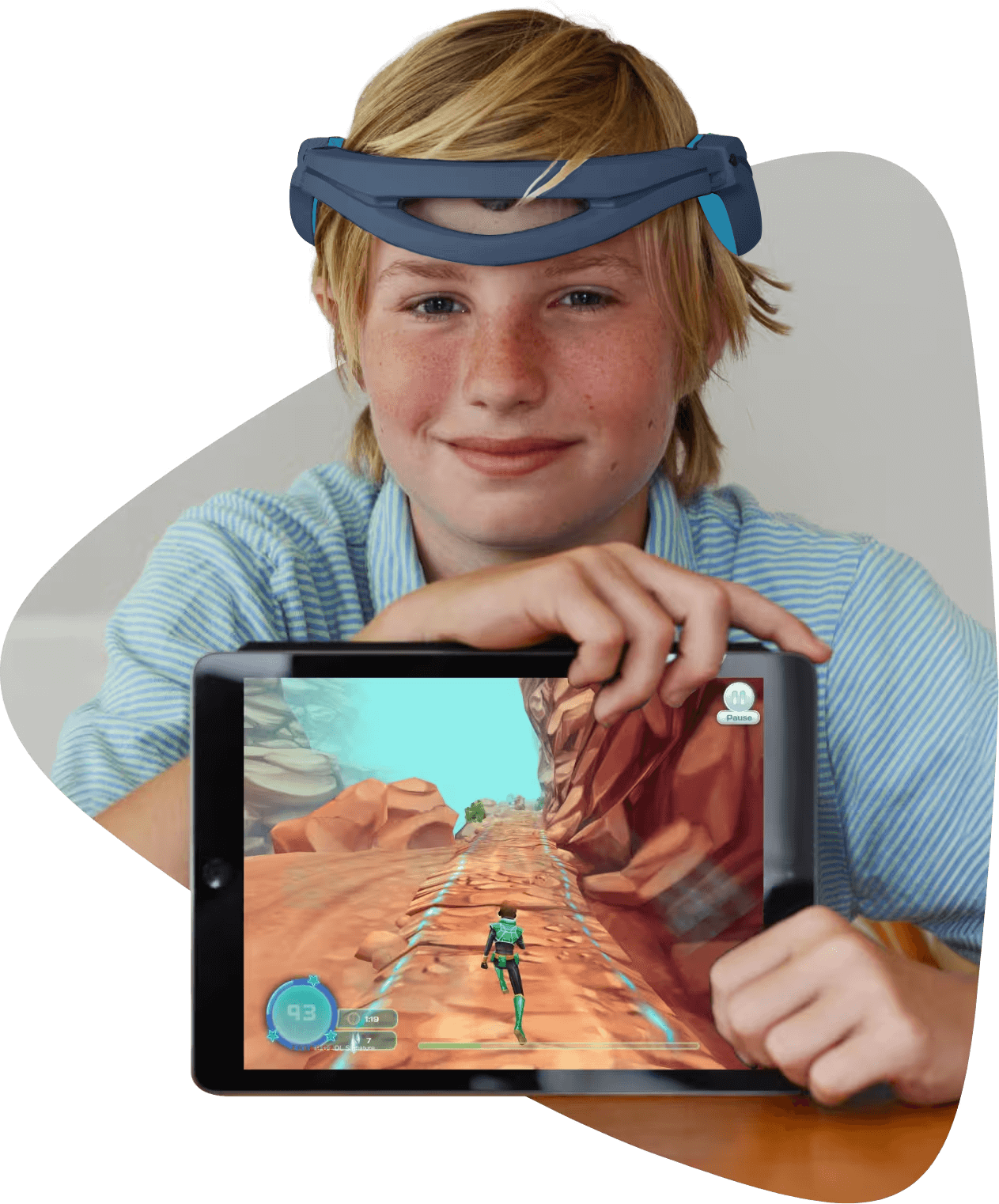
With the support of the Thynk Better EEG headset, our programs have been validated through eight successful clinical studies involving over 300 users. The headset provides a feed-forward approach, a brain-computer interface (BCI) which reads your child’s brainwaves, understanding the active areas of the brain during play. Heightened attention centers in the brain indicate greater focus.
 Personalized Cognitive Skills Training
Skylar’s Run provides children a fun, yet challenging, space to enhance 13 key cognitive skills needed for lifelong success. Each mission hones these skills while advancing through engaging game sessions.The difficulty adjusts dynamically as the player progresses. Using feedback from our AV headset, Skylar runs only as the player focuses on the game, thus the challenge is never too hard or too easy.

Clinically Tested and Proven Effective
Skyler’s Run consists of 13 personalized cognitive skills, designed to improve attention, inhibition, and self-regulatory control. Each mission within Skylar’s Run is carefully crafted to develop and master these skills through interactive play. By repeatedly challenging and expanding these cognitive abilities, children can enhance their ability to focus, manage impulses, and regulate themselves effectively, leading to success in school, home, and social settings.
Testimonials

“My son definitely has grown since starting the program. He is a bit more focused. Still is hyper at times and has had at times moments with peers. Though, not as much before this program. So, there is a sure change in him. I hope he continues it because it has helped him a lot."

“My son definitely has grown since starting the program. He is a bit more focused. Still is hyper at times and has had at times moments with peers. Though, not as much before this program. So, there is a sure change in him. I hope he continues it because it has helped him a lot."
“My son definitely has grown since starting the program. He is a bit more focused. Still is hyper at times and has had at times moments with peers. Though, not as much before this program. So, there is a sure change in him. I hope he continues it because it has helped him a lot."
“My son definitely has grown since starting the program. He is a bit more focused. Still is hyper at times and has had at times moments with peers. Though, not as much before this program. So, there is a sure change in him. I hope he continues it because it has helped him a lot."
“My son definitely has grown since starting the program. He is a bit more focused. Still is hyper at times and has had at times moments with peers. Though, not as much before this program. So, there is a sure change in him. I hope he continues it because it has helped him a lot."
“Our daughter gets angry when frustrated but she has been a lot better at regulating anger. She thinks for a moment before hitting. If she does get angry, will apologize, more self-aware. More calm in afternoons, More calm, even though his morning medication has worn off.”
“I have noticed my daughter, with myself at least, difference in her actions. She listens more, more caring and respectful towards me at least. Others still need to work on it. She has been. Bit more emotional lately and less aggressive towards other classmates. Still gets upset when she doesn’t get her way but those moments aren’t as often as before.”
“My student recently had a fight with her brother where her brother ended up breaking a window. Despite this, the mom mentioned that she was still able to keep her cool with her brother and emotionally regulate”
“During tutoring, he was willing to save his points to get the prize he wanted. He is getting his chores done prior to being reminded. He seems more focused. “
“My son is becoming more patient with his new little brother. He is actually trying to create a bond and has become a little over protective. He now cares more about his test scores and understands more about what it means to focus.”
“I think she thinks before she speaks a little more than before.”
“I feel like it allowed him to focus more and the program did exactly what it said it did. At home I noticed changes in his ability to focus. He got better at completing tasks.”
“His (my son) ability to be cognitively and emotionally flexible has increased. Evident in the fact that he took the news that he would not be able to go on his abroad program quite well”
“Less negative emails from teachers, it seems like there are less of these emails.”
“Seems to pay attention more at school.”
“At home, mornings have been easier. Before SR, it would take forever for him to get ready (get shoes tied) and now it seems like it takes him less time to get ready. Before it was a huge struggle. Been doing well at both parent’s house. Getting projects done easier.”
“In the beginning of the training/before the training, my student would have trouble getting up early for sailing in the morning and out the door in time, but recently the mom noted that at first she had trouble getting up and ready for sailing but then she pulled herself together and even had time to make herself eggs before heading out for sailing.”
“He had previously struggled with peer interactions at school, but has more recently demonstrated more resilience in this area. It has led to a noticeable improvement in his overall mood.”


Want to learn more?
Sign up to be on our mailing list